Nobody gave a damn about Tsushima before 2020. I sure didn’t. You probably couldn’t find it on a map. Then Sucker Punch releases Ghost of Tsushima and suddenly everyone is an expert on 13th – century geography. The game makes it look like a poem. Maple leaves, haikus, wind. The actual place? It is rougher.
It’s a border rock. Closer to Busan, South Korea – maybe 50km out – than the main islands of Japan. It’s been the shield catching arrows for centuries. The legend isn’t pretty samurai duels. It is desperation. The terrain is 89% steep forest and mountain. It feels old. Not Kyoto old – Kyoto is a theme park. Tsushima feels primal. Stepping off the ferry feels heavy… you aren’t entering a render. You are walking into the dirt and blood that inspired the polygon version. The reality hurts more.

Standing on the Frontlines: The Mongol Invasions and Komoda Beach
Don’t show up to Komoda Beach looking for a Mai Tai. You are standing in a graveyard.
- A mongol fleet of nightmare proportions – 900 ships, 30,000 troops – crashed into the sand here. The defense? Eighty samurai. Eighty. So Sukekuni led them out to die. And they did die. Brutally. But they bought a few hours.
Being there now is… weird. The sand is grey, the water looks too dark. The wind coming off the strait cuts right through your jacket. Komodahama Shrine sits there. Small. It isn’t flashy like the tourist traps in Tokyo. You stare at the horizon where the black ships came from and get a feeling in your gut that isn’t just the cold.
Local advice: Put the camera away. Just walk. The quiet is deafening. Like the air is still waiting for the screaming to start again.

Hiking Kaneda Castle: Ancient Defenses with Panoramic Bay Views
This hike is no joke.
Kaneda Castle isn’t a “castle.” If you want white towers, go to Himeji. This is an ancient fortress from 667 AD. That is old. Older than the katana. The Yamato court built it after getting crushed by the Tang Chinese and Silla forces. Basically a panic – room for a nation.
The trail is a 2.2km drag up Mt. Joyama. Starts easy on an old military road from the Russo – Japanese war, but the end? Your legs will burn.

Then you see the walls. Stone ramparts snaking along the ridge, eaten by moss. Looking like part of the geology. The view of Asou Bay at the top punches the air out of you. A jagged mess of rias coastline – land fingers clawing the sea. Spotted with islets. You can see Korea on a good day. Sitting on a ruined watchtower… you feel like a ghost sentry. It is lonely. Magnificent.
Concrete Ghosts: The Toyo Battery Ruins
Kaneda is ancient fear; Toyo Battery Ruins is industrial dread. Up on the northern tip. It used to be the biggest gun battery in Asia.
Built in the 30s. A concrete monster underground designed for 40cm cannons meant for the battleship Tosa. A “phantom fort.” Huge, secret, and useless – it never fired a shot in anger.
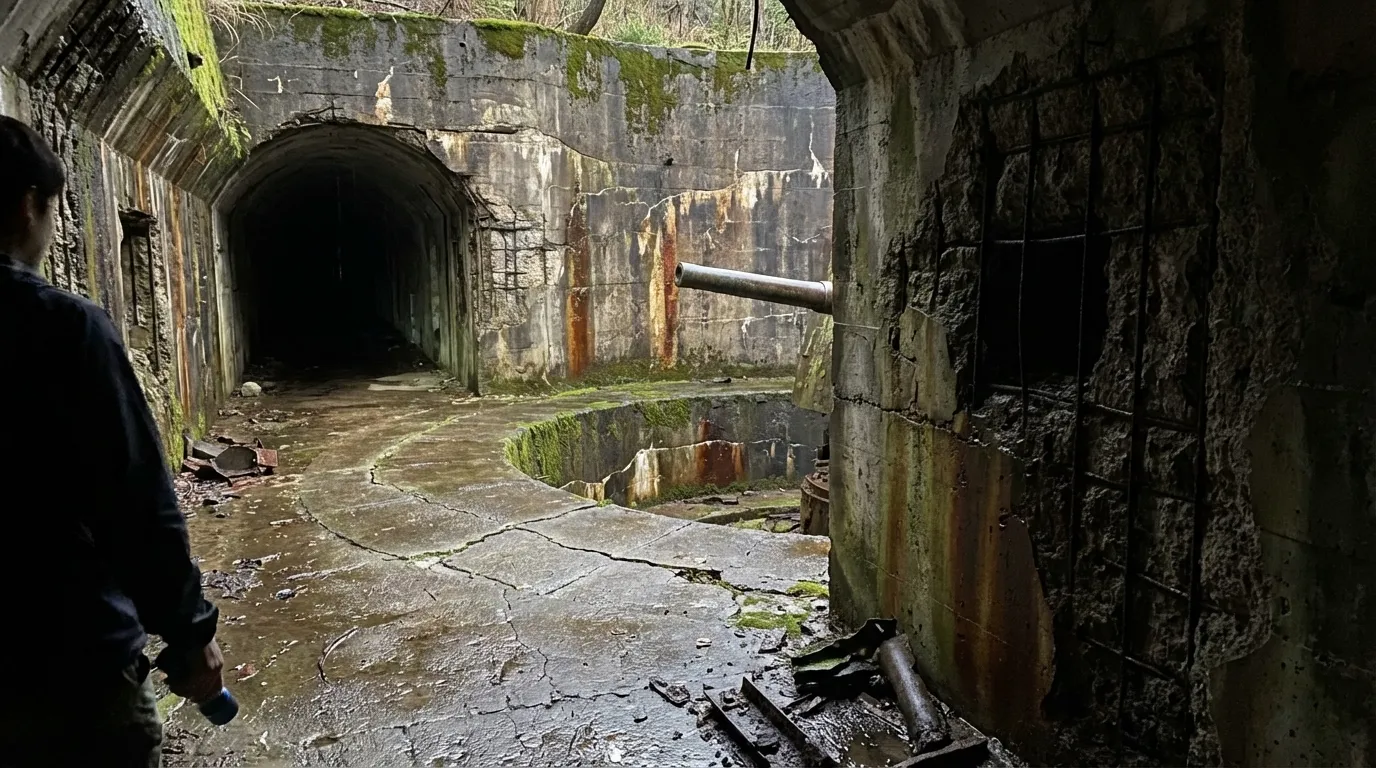
Walking in there feels like stepping into a mausoleum. You creep through wet tunnels and stand in the circular pits where death machines were supposed to rotate. The silence isn’t natural. It smells like wet rust and forgotten wars. Some tunnels are pitch black – bring a light. It reminds you that Tsushima is just a shield. Always has been. Since the 7th century.
Watatsumi Shrine: The Iconic Floating Torii Gates of Asou Bay
You have seen the Instagram shots. Five torii gates. Two in the ocean.
Watatsumi Shrine is for the sea gods – Hikohohodemi, the Dragon Palace. Mystical vibes. But listen to me: Check the tides.
If you show up at low tide, it’s just wood stuck in mud. It looks sad. You need high tide. That’s when the water hits the pillars and the illusion works. It looks like a gateway to somewhere else.
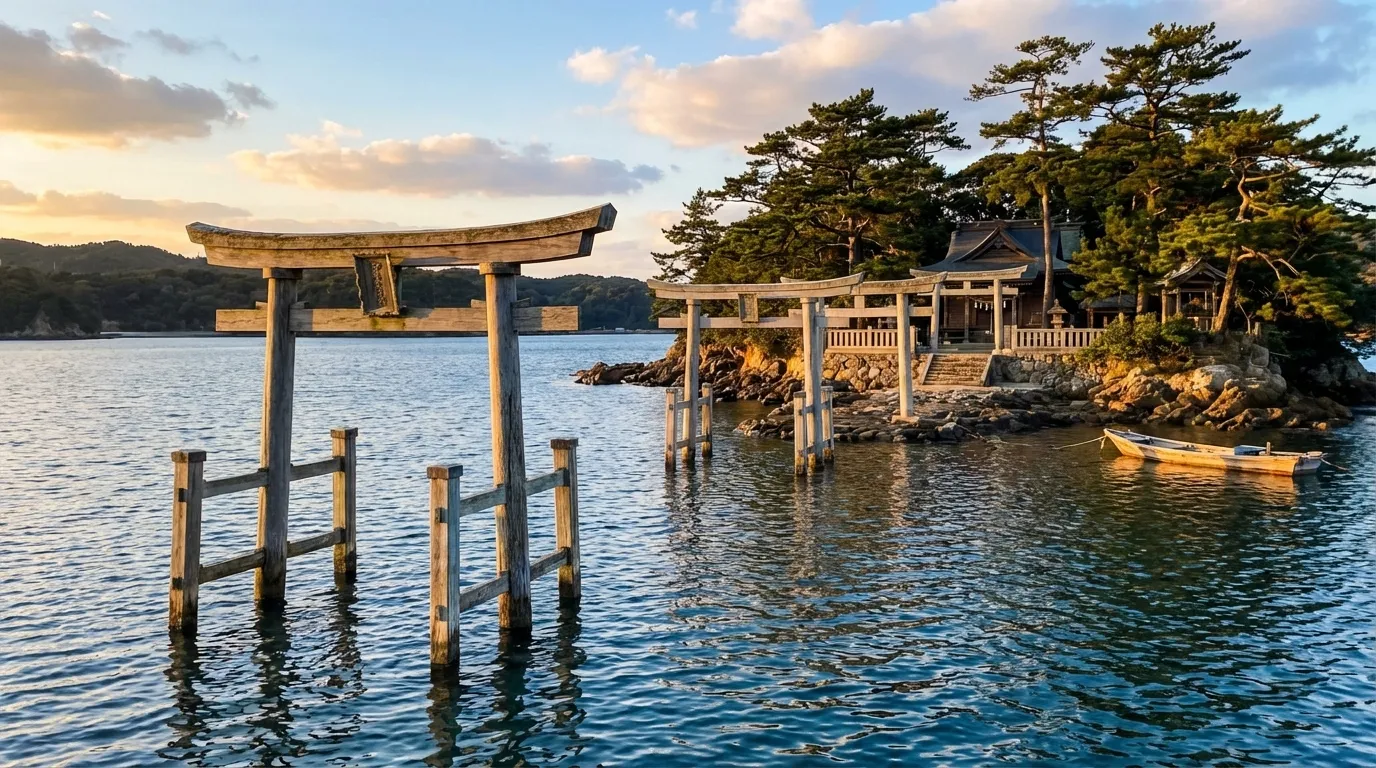
A typhoon wrecked one gate in 2020. Sad stuff. But gamers – fans of Ghost of Tsushima – paid to fix it. Crowdfunded it in days. A bizarre link between pixels and Shinto.
Go behind the shrine. There is a path. It goes to the deity’s “grave.” The trees get twisted, covered in vines. The vibe flips from touristy to… heavy. Sacred.
Paddling the Rias: Sea Kayaking Asou Bay
Looking at Asou Bay from a mountain is cool; floating in it is better. It’s a rias coast – a drowned river valley. A maze of inlets.
The water is glass. Protected from the strait’s violence. Sea kayaking here isn’t a sport. It’s therapy. You can paddle right up to the Watatsumi gates or crash on an uninhabited island for lunch.
From down there, the island looks prehistoric. Trees growing straight into the salt water. The only sound is your paddle dripping. Locals run tours. They don’t speak much English usually. Doesn’t matter. Paddling is a language.
The Legacy of the So Clan: Banshoin Temple and Kaneishi Castle Gardens
The So clan ran this rock for 600 years. Diplomats. Killers. Gatekeepers. Their spot, Banshoin in Izuhara, has power.
The main draw is the Hyakugangi. A stone staircase – 132 steps – up to the graves. It isn’t just stairs. It is a tunnel through cedars that are 1,200 years old. Monsters. You feel insignificant walking up there. The temperature drops. The town noise dies.
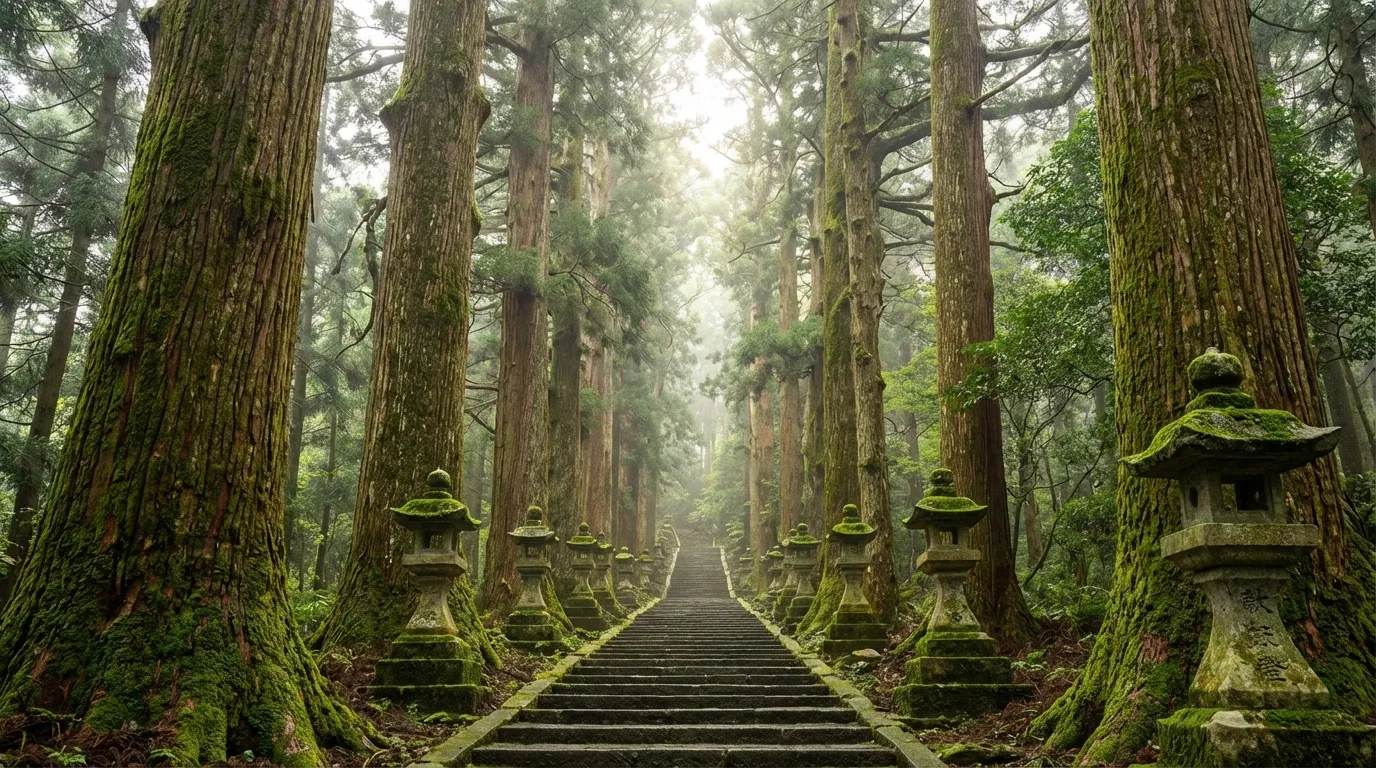
The graves at the top are massive. Stone lanterns everywhere. Like Okunoin but empty.
Check the Kaneishi Castle Garden nearby. Restored from diagrams. The pond is shaped like the character for “heart.” You can’t see the whole shape from one spot – you have to move. A mind trick. It’s a good place to shut up and think.
The Phantom of the Forest: The Tsushima Leopard Cat
You think you saw a cat? Look again. Was it big? Round ears with white spots? You probably didn’t.
That is the Tsushima Yamaneko. Leopard Cat. Not a stray tabby. A distinct subspecies found only here. Maybe 100 left. They are the island’s ghost – elusive and dying out.
You won’t see one in the wild. Forget it. Go to the Tsushima Wildlife Conservation Center. They usually have one – often an injured rescue that can’t go back. Staring at an animal that is blinking out of existence… it messes with you.
Stone Roofs and Gales: The Warehouses of Shiine
Down south in Shiine, the architecture gets weird. Ishiyane. Stone roofs.
Typhoons hammer this place. Normal clay tiles become shrapnel. Thatch blows away. The locals got smart. They used massive slabs of stone – shale, quartz – to roof their sheds. The rocks are so heavy they don’t need glue. Gravity holds them down.
They look like fantasy huts. Crude. Heavy. Indestructible. It proves the people here are stubborn. They didn’t hide from the wind; they just put heavier rocks on their heads.
Ghost of Tsushima IRL: A Pilgrim’s Guide to Real – Life Game Locations
Let’s be honest. You want the Golden Temple.
It isn’t there.
Sucker Punch lied to you. Well – they took liberties. Mashed up styles. But the vibe? That is real.
- Komoda Beach: Game start. Real.
- Kaneda Castle: Act 1 finale. Real (rubble).
- Watatsumi Shrine: Cloud Sun Shrine. Very real.
- Mount Shiratake: Winding Mountain Shrine. The peaks match.
- Pampas Grass Fields: You won’t find the specific flower field, but the pampas grass (susuki) near Mt. Ariake hits the spot.
The game cranked the saturation – real Tsushima is greens and gloomy greys, not neon – but the shape of the land is true. The cliffs. The verticality. It tracks.
Samurai Soul Food: Rokube, Ishiyaki, and Liquid Gold
The food is strange. Good strange.
Rokube. Noodles made from fermented sweet potatoes. Rice was hard to grow on mountains, so they rotted potatoes to save the starch. The noodles are short, black, and chewy. They look like grubs. Just eat it. The broth tastes like the ocean.
Ishiyaki. “Stone grilling.” Fishermen used to cook on hot rocks. They still do. You get a slab of quartz porphyry and sear fish and squid right at the table. The stone sucks up the moisture. Smoky. Wild. Drink sake with it.
Get Kasumaki for dessert. Sponge cake wrapped around bean paste. Invented to welcome lords back from Edo. Sugar was gold back then, so using a ton of it was a flex.
And Tsushima Honey. Not the plastic bear crap. This is from Japanese Honeybees kept in hollow logs on cliffs. They hit hundreds of flowers. It tastes complex. Like eating the forest.
Beyond the Sword: Trekking Mount Shiratake and Primeval Forests
Mt. Shiratake is the heart of this place.
A continental primeval forest – plants from Japan and Korea mixing where they shouldn’t. It’s a National Monument.
The hike is 3 – 4 hours. The ground is soft with rotting leaves. But the top… the summit is a beast. A giant quartz spike. You have to scramble.
The view from 519m is insane. Bays, trees, endless water. People worshipped this rock for ages. When the wind hits you up there, you get it. It feels like gods live here.
Heads up: It gets slick. Like, “snap your ankle” slick. Wear boots.
Getting There: Ferry and Flight Options from Fukuoka and Nagasaki
Getting here is a pain. Good. Keeps the influencers away.
By Air:
Fly into Tsushima (TSJ) from Fukuoka or Nagasaki. Short hop – 30 minutes. The landing is terrifyingly pretty; you skim the ridges until the wheels touch.
By Sea:
The classic way. From Hakata Port:
- The Jetfoil (Venus): 2 hours 15. Fast. You are seatbelted in. Smooth unless the sea is angry.
- The Car Ferry: 5 hours. Slow. Smells like oil and brine. But you can stand on deck and freeze. It’s cheaper.
There is a boat from Busan, but it gets cancelled whenever politics or viruses get weird. Don’t count on it.
Planning Your Itinerary: The Best Seasons to Visit the Island of the Samurai
Don’t visit just whenever.
Spring (March – May): Probably best. Blossoms. Azaleas. Air is breathable.
Summer (June – August): Hot. Sticky. The rainy season sucks – you won’t see anything. But if you want to swim, August is it.
Autumn (Oct – Nov): The sweet spot. Red leaves (like the game), fatty fish, and the Komodahama festival. The warrior parade is decent.
Winter (Dec – Feb): Freezing. The wind is a knife. But the air is crisp. Best chance to spy on Korea.
Honestly? Just go. Rent a car – you NEED a car, buses are a myth – and drive up a mountain. That is where the real island is.