Turn the corner. Leave the neon noise of Korinbo behind. The 21st century just… evaporates. It’s jarring. One second you’re dodging shoppers, the next you’re staring at ochre earthen walls that haven’t shifted since the 1600s. This is Nagamachi.
It isn’t a theme park. Get that straight immediately. People live here. Behind those imposing gates and mud walls are families watching Netflix, cooking dinner, living modern lives in a place that screams feudal Japan. It feels authentic—maybe grittier than Kyoto’s Gion. Quieter too. The district hugs the castle grounds. A strategic choice. Samurai needed to be close. Ready to sprint to their lord’s defense if things went sideways.
The Legacy of the Maeda Clan and Samurai Heritage
To get Nagamachi, you have to get the Maeda clan. Absolute titans. Think Rockefellers with katanas. Only the Tokugawa in Edo had more rice—more power—than the Kaga Domain. Filthy rich.
But money brings paranoia. They didn’t want the Shogun invading, so they burned cash on arts and culture instead of a massive army. A shield made of silk and tea. That culture trickled down to the samurai here. These weren’t just muscle; they were poets. Administrators. Walking these streets feels sophisticated because you’re walking through the suburbs of the Edo period’s intelligentsia.
The Hidden History: The Christian Warlord
Most guidebooks skip this part. The Maedas were harboring a fugitive. Takayama Ukon. A famous “Christian Daimyo” exiled by the government for his faith.
The clan valued talent over politics. They took him in. For 26 years, Ukon lived right next door, shaping the castle design and refining the tea ceremony. If you spot a cross hidden in a roof tile? Or a lantern that looks vaguely European? That’s the legacy of the “Hidden Christians.” Protected right under the Shogun’s nose.
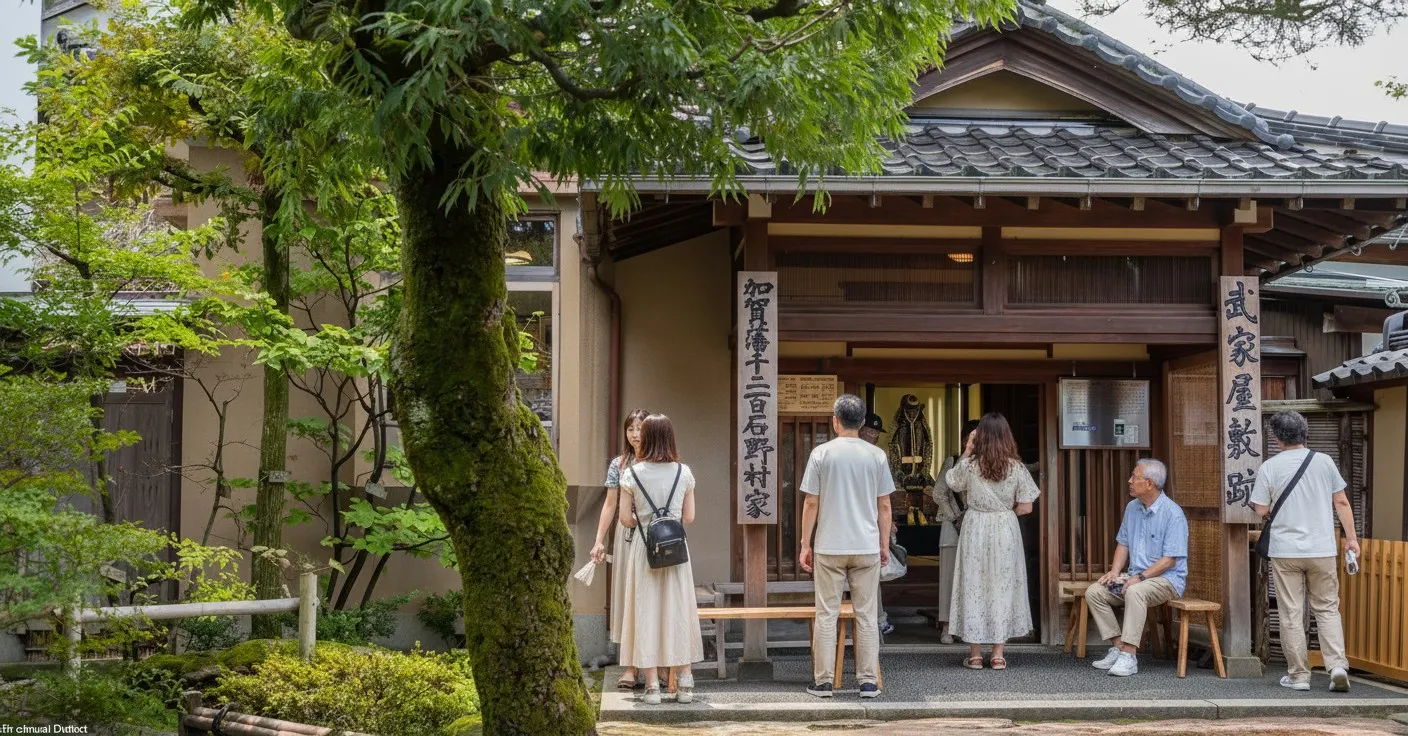
Exploring the Nomura Clan Samurai House and Garden
If you pay for one ticket, make it the Nomura House. Honestly? Skip the others if you’re rushing. Just do this one.
The woodwork is fine—cypress ceilings, very nice—but the garden is the killer. It’s tiny. Claustrophobic almost. But the design makes it feel endless. A koi pond snakes under the veranda, close enough to touch (don’t).
It got two stars from Michelin. An American journal ranked it #3 in Japan, beating out massive famous parks. It’s hypnotic. You sit on the tatami, staring at the moss and the waterfall, and the tourists behind you fade into white noise.
The Merchant Side of the Story: Shinise Kinenkan
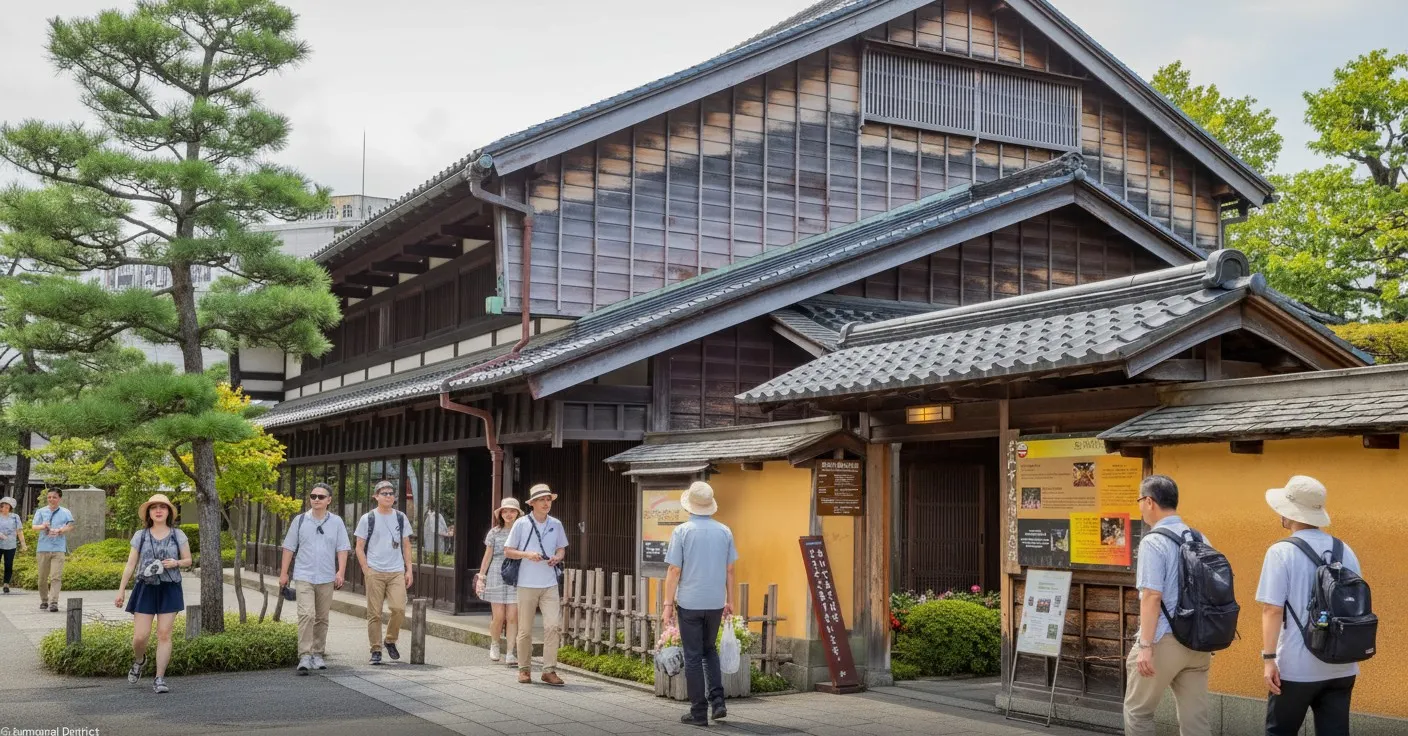
Samurai get the glory. Merchants paid the bills. For a dose of reality, go to the Kanazawa Shinise Kinenkan Museum.
Originally the Nakaya Pharmacy, 1579. A stark contrast. Samurai hid behind walls; this house sits right on the street, hungry for business. Inside smells like dried herbs and old wood.
Upstairs they show temari—embroidered thread balls—and sugar crafts. It reminds you that while the warriors were drilling with swords, the merchants were perfecting the delicate stuff Kanazawa is famous for.
Hidden Gems: The Ashigaru Foot Soldier Residences
Don’t walk past these. Big mistake.
The Nomura house is upper-crust bling. The Ashigaru Museum is where the grunts lived. Cannon fodder. The lowest rung on the ladder.
Preserved here are the Shimizu and Takanishi residences. They are free. Totally free. Thatch roofs, simple structures. But here’s the thing—they had gardens. In Tokyo, foot soldiers lived in barracks. Here? The Lord was so flush with cash he gave his grunts detached homes with backyards for veggies. A fascinating peek at the warrior “middle class.”
The Art of the Canal: Kaga Yuzen Silk
The water wasn’t just for looks. It was a tool. Follow the ditch and you might find the Nagamachi Yuzen Silk Center.
Kanazawa is known for Kaga Yuzen. Silk dyeing with realistic nature motifs—bugs, rot, wabi-sabi stuff. Artists used the river to wash excess glue and dye. That pretty canal? Used to be full of colorful silk streamers.
At the center, watch them paint. It’s agonizing. A master paints one peony petal for 20 minutes. Makes you understand why a kimono costs as much as a Honda Civic.
Komo-gake: The Unique Winter Straw Mat Tradition
Visit between December and March and the walls look… fuzzy.
They hang straw mats called komo. Not for decoration. Kanazawa winters are brutal—wet, heavy snow. Freeze, thaw, repeat. That cycle destroys mud walls.
The komo-gake protect the structure. Pure engineering, but accidentally beautiful. Golden straw against a grey sky, dusted with white? Photographers lose their minds over it.
Strolling the Earthen Walled Streets and Canals
Put the map away. Just get lost.
The layout is a maze on purpose. Defensive design. You’ll see “T-shaped” intersections (T-ji-ro). No long lines of sight. If an enemy charged, they’d hit a wall and get shot by archers. Simple. Effective.
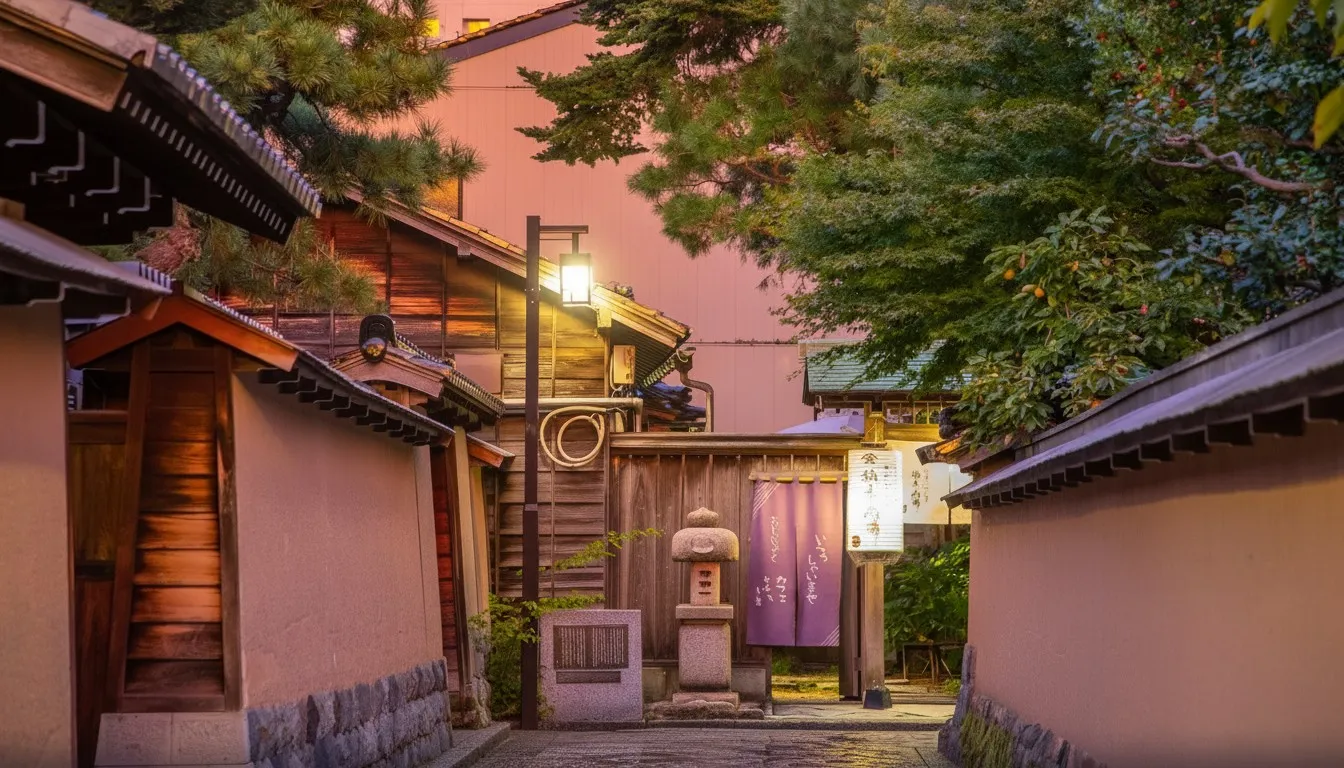
The walls are tsuchi-kabe. Mud, straw, oil. Distinct yellow-orange. They peel and crack over time. Messy and textured.
The Onosho Canal cuts through it all. Oldest water in the city. Once for floating logs, now it just makes the neighborhood sound like a rushing river. Cools everything down.
Best Photo Spots for That Perfect Old Japan Shot
Everyone shoots the Nomura entrance. Boring. Go here instead:
- Nagamachi Ninohashi Bridge: Stand on the bridge. Water, stone, trees, walls. All in one frame. Go early before delivery trucks ruin the vibe.
- The “S” Curve: Find the sharp bend. Get low. Shows off the height of the walls.
- Mossy Details: Don’t just shoot wide. Gate roofs have thick green cushions of moss. Zoom in. Contrast it against the dark timber.
Nagamachi After Dark
Staying the night? Come back after dinner.
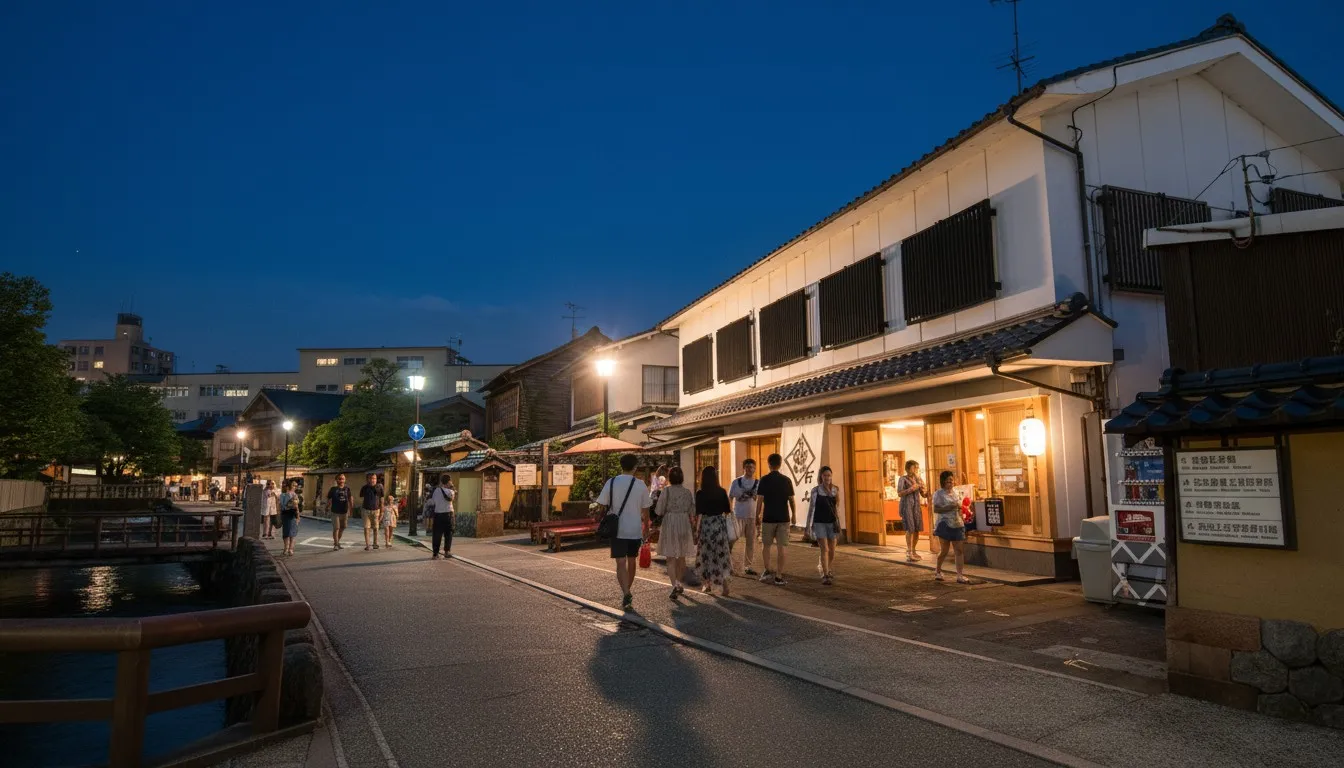
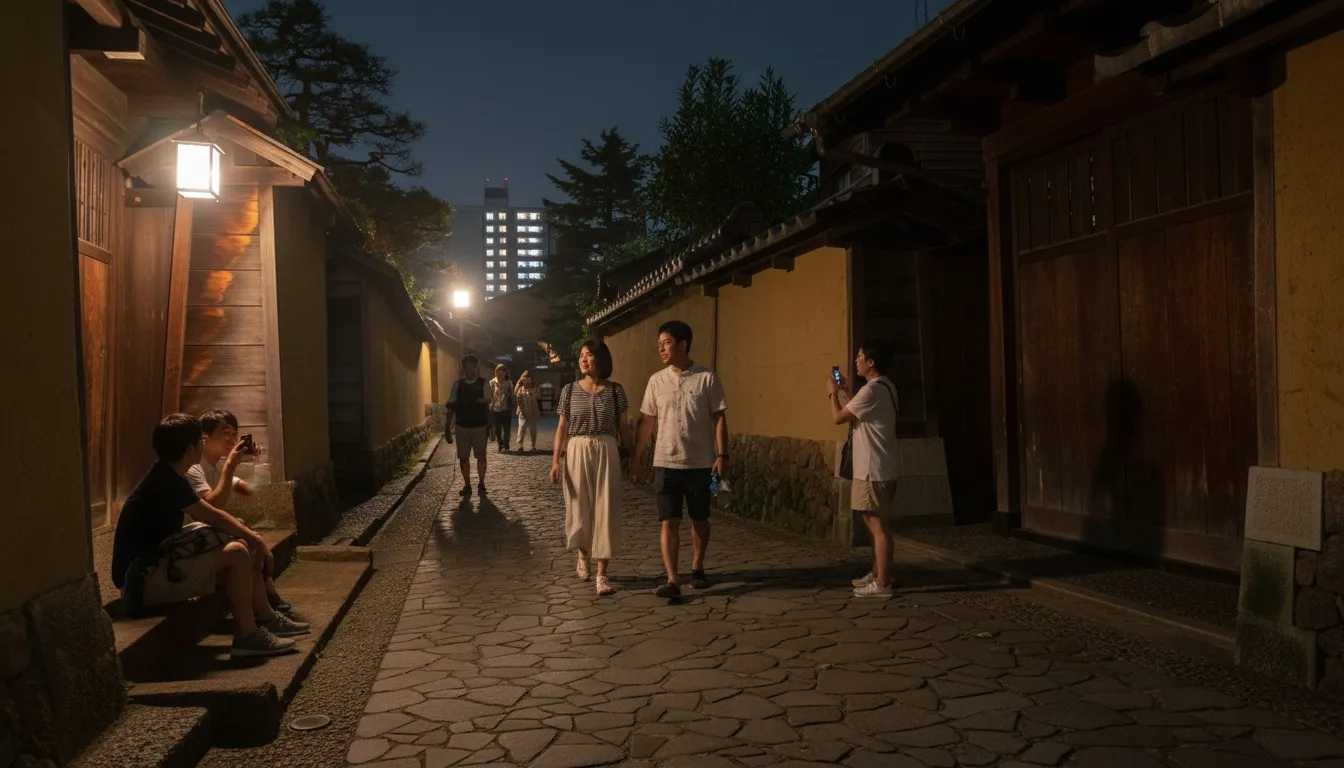
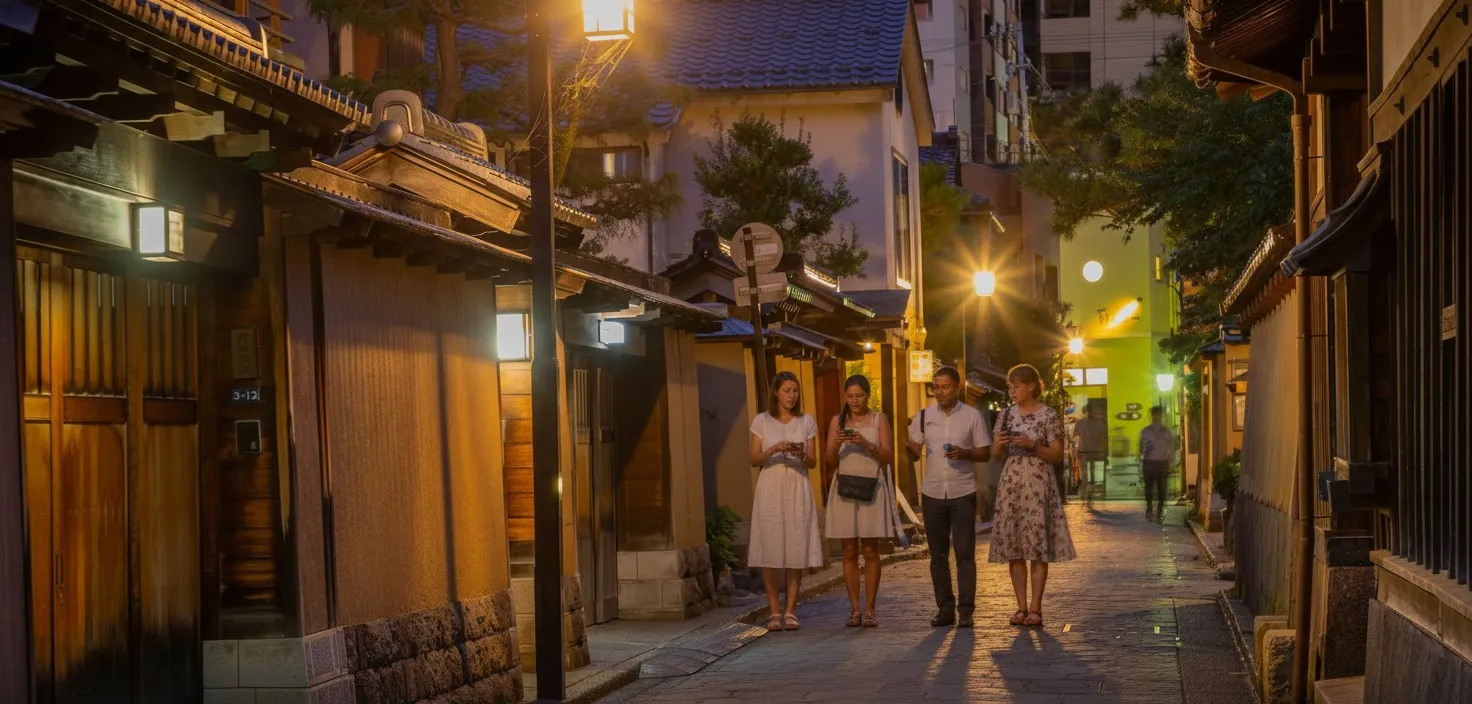
The crowds vanish. The city turns on low, warm lights that bounce off the cobbles. Especially if it rained. It feels less like a museum, more like a Kurosawa film set. Silent except for the water. Keep your voice down. It’s spooky. Romantic.
Where to Enjoy Traditional Matcha and Wagashi Sweets
Walking is thirsty work.
- Nomura House Tea Room: Go upstairs. Second floor. Matcha and a dry sweet (higashi). The view looking down on the garden is a totally different perspective.
- Murakami: Proper wagashi shop. Cafe inside. Their warabi-mochi is ridiculous—soft jelly covered in kinako powder.
- Tea and Confectionery Workshop Taro: Modern take. Slick packaging. Chocolate bean paste? Why not. Good for gifts that don’t look like they came from grandma’s pantry.
Top Dining Spots for Kaga Cuisine Nearby
Not a huge restaurant district, but the few here hit hard.
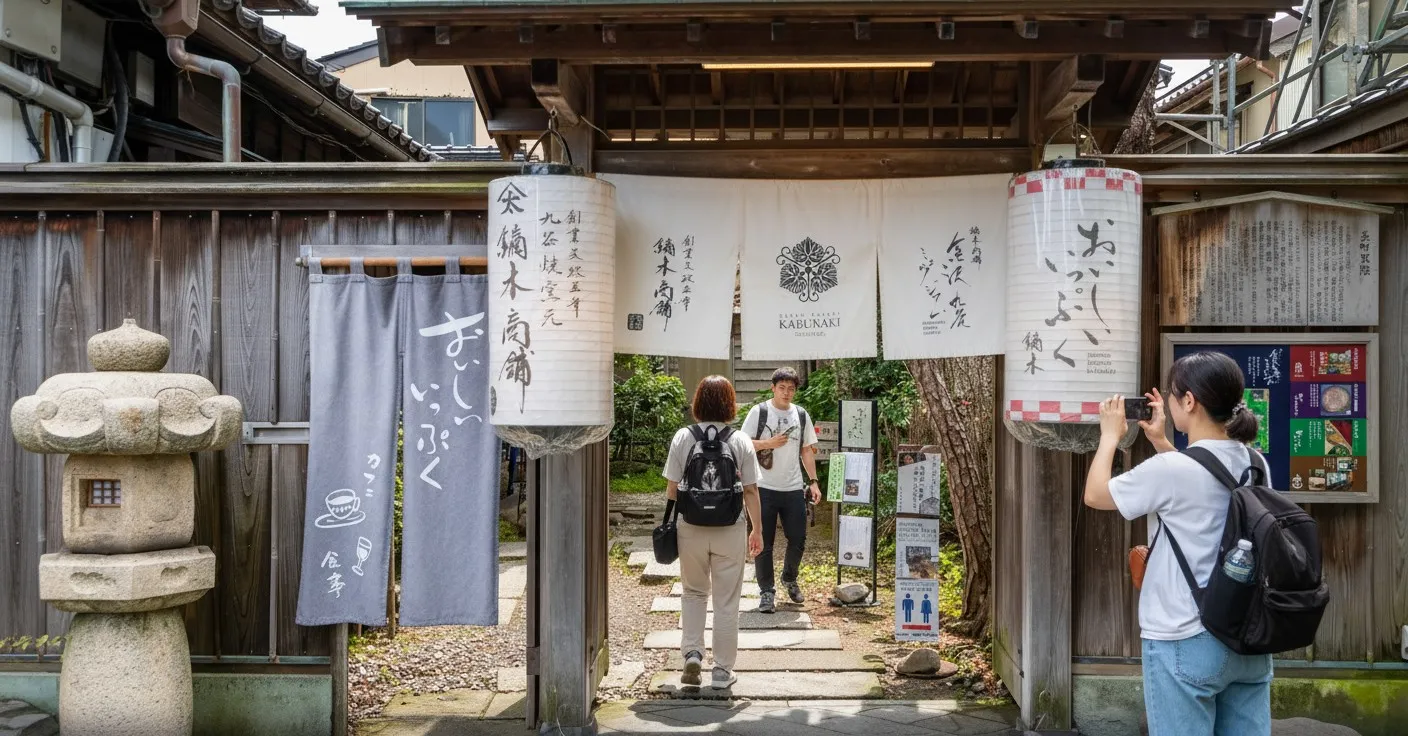
- Kaburaki: The big one. Kutani porcelain shop with a restaurant in the back. Fancy plates, local food. Lunch is reasonably priced.
- Otomezushi: Got money to burn? Book a month early. Best sushi. The nodoguro (blackthroat seaperch) will ruin other fish for you.
- Ippuku Kaburaki: Casual cousin. Get the jibuni.
- What is Jibuni? Try it. Duck coated in flour, stewed in thick broth. Wasabi on top. Slimy, warm, distinctly Kanazawa.
A Note on Etiquette: Don’t Be That Tourist
It looks like a movie set. It isn’t.
- No Drone Zone: Keep it in the bag. Seriously.
- Don’t Eat and Walk: Generally rude in Japan, but here? Keep the streets clean.
- Private means Private: No ticket booth? Don’t peek. That’s someone’s driveway.
How to Get to Nagamachi and Best Times to Visit
Access:
From Kanazawa Station (East Exit), grab the Kanazawa Loop Bus. Left Loop is usually faster. Get off at Korinbo. Walk behind the 109 Department store and head down the hill. Easy.
Timing:
- Early Morning (7:00 – 8:30 AM): Streets are empty. Mystical.
- Winter (Jan – Feb): Freezing cold. But the snow on the straw mats? Magic.
- Late Afternoon: Sun hits the orange walls. Glows.
Combining Your Visit with Kenrokuen and Kanazawa Castle
Kanazawa is compact. Do the “Big Three” in one day.
Start at Kenrokuen Garden at 7 AM. Beat the buses. Cross the bridge to Kanazawa Castle Park.
Exit via Oyama Shrine. Perfect transition. The gate is a weird mix of Japanese and Dutch stained glass—shows the city’s open mind. Walk through, exit, and you’re practically at Nagamachi.
Lunch. Then the 21st Century Museum of Contemporary Art to reset your brain.
Don’t overthink the route. Wrong turns usually lead to cool coffee shops anyway. Just walk.